
From Cannes Trophies to UN Reform: Why the World's Best Storytellers Still Can't Solve the Reality Gap —
As Cannes Lions 2026 prepares to honour Oprah Winfrey with the LionHeart Award, the distance between award-winning creativity and real-world SDG implementation has never been wider. A deep investigation into the $3 billion festival, the UN leadership crisis, and Nigeria's grassroots SDG push.

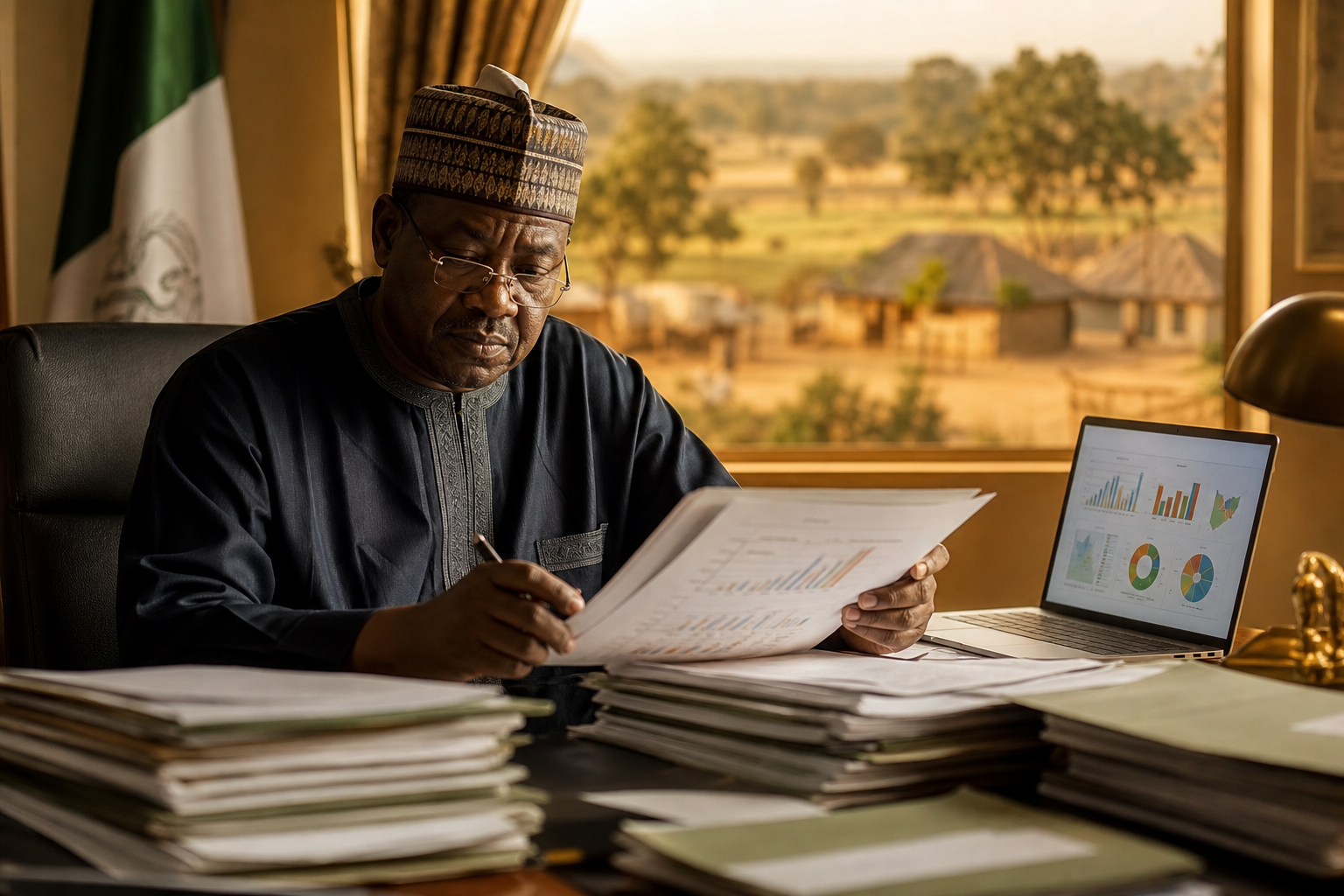
As the creative industry prepares to celebrate its most purpose-driven year yet, the distance between a gold Lion and a functioning water pipe has never felt wider.
📌 Key Takeaways- Cannes Lions 2026 will host 15,000+ delegates and honour Oprah Winfrey with the LionHeart Award — signalling the industry's expanded social ambition
- The 2025 Grand Prix winners proved that campaigns can drive systemic change, not just impressions
- UN Secretary-General candidates openly admitted to a "fundamental crisis of confidence" in the institution
- Nigeria's Imo State launched its first-ever SDGs Stakeholders' Roundtable — real implementation work happening far from the spotlight
- The structural "implementation gap" between communicating change and producing change is wider than ever in 2026
In the last week of June, somewhere between 15,000 and 16,000 people — creative directors, brand strategists, tech founders, and media executives — will descend on a small city on the French Riviera for what has become the most influential gathering in global communications. Cannes Lions 2026 promises more than 150 hours of programming, approximately 500 speakers, and a headline moment that distils everything the industry wants to believe about itself: Oprah Winfrey walking onto the Lumière Theatre stage to receive the LionHeart Award, a recognition reserved for those who have used their platform to create meaningful and lasting societal change.
It will be beautiful. It will be moving. And somewhere in Owerri, in Imo State, Nigeria, a government official will sit down at a desk and try to figure out why, with just four years left before the 2030 Sustainable Development Goals deadline, the goals still feel less like an agenda and more like a wish list.
This is not a story about cynicism. The creative industry has done genuinely remarkable things. The UN, for all its dysfunction, remains the world's most important multilateral institution. And the Imo State Government's decision to convene its first-ever SDGs Stakeholders' Roundtable is an act of political seriousness that deserves more than a footnote in a development report. This is a story about a structural gap — between the art of communicating change and the much harder, slower, less glamorous work of actually producing it.
That gap has a name. Practitioners call it the implementation gap. And in 2026, it is wider than it has ever been.

What Cannes Lions 2026 Is Becoming: The $3 Billion Creativity Festival's Social Ambition
Cannes Lions began in 1954 as a modest film advertising festival, modelled on the Cannes Film Festival that had launched a decade earlier. For most of its history it was exactly what it sounded like: a celebration of commercials, with a side of yachts. The transformation into something with broader cultural ambitions has been gradual, fitful, and frequently contested within the industry itself.
But the 2026 edition represents a genuine inflection point. The decision to give the LionHeart Award to Oprah Winfrey is not merely a booking coup — it is a statement of intent. Winfrey is not an advertiser. She is, in the most literal sense, a communicator who has spent five decades demonstrating that media, at its best, is a vehicle for human understanding. Her career has encompassed everything from syndicated talk television to book clubs that genuinely changed reading habits, from a school for girls in South Africa to a production company whose projects have shaped cultural conversations about race, identity, and belonging.
The festival's programming reflects this expanded ambition. Sessions will address the creator economy, the ethics of artificial intelligence in creative work, the future of sports marketing as a vehicle for community building, and — most significantly for our purposes — the question of how creativity can serve sustainability and social impact rather than simply claim to.
"The distance between a campaign about human dignity and an actual improvement in human lives has always existed. What's changed is that the industry has stopped pretending the distance doesn't matter."
This is not nothing. The creative industry's capacity for self-reflection has historically been limited. Agencies that won awards for "purpose-driven" work while their core business remained unchanged, brands that ran campaigns about sustainability while lobbying against environmental regulation — the hypocrisy was visible and widely noted. What is genuinely different about this moment is that the industry's own award structures have begun to impose accountability. To win in the categories that matter most, work must demonstrate actual impact, not just creative ambition.
Award-Winning Campaigns That Actually Changed Systems: The 2025 Proof Points
Consider the two campaigns that dominated the 2025 Cannes Lions cycle in the purpose and impact categories — campaigns that have since become reference points in discussions about what creative work can actually accomplish.
New Zealand Herpes Foundation — Grand Prix for Good
Developed by FINCH in Sydney and Motion Sickness in Auckland, "The Best Place in the World to Have Herpes" did something that decades of conventional public health messaging had failed to do: it made herpes stigma a matter of national conversation in New Zealand, not by lecturing people about the virus's prevalence or the unfairness of social shame, but by reframing the entire campaign as an act of patriotism.
The strategic insight was deceptively simple. New Zealand has a ferocious competitive culture — a small nation that has punched above its weight in rugby, filmmaking, environmental policy, and pandemic response. The campaign asked: what if New Zealand became the first country in the world to genuinely eliminate herpes stigma? What if that became another thing New Zealanders were simply better at than everyone else?
The result was, in the words of jury president Judy John of Edelman, "brave, outrageously creative, wildly ambitious and educational" — a combination she described as highly unusual for the category. The campaign generated measurable changes in how New Zealanders talked about the condition publicly, and the New Zealand Herpes Foundation reported significant increases in people seeking testing and support. The Grand Prix for Good was awarded unanimously.
Natura's Amazon Greenventory — SDG Lions Grand Prix
The SDG Lions Grand Prix went to Africa Creative DDB in São Paulo for work on behalf of Natura, the Brazilian cosmetics company, that addressed one of the most intractable narratives in global environmentalism: the idea that economic development and Amazon preservation are fundamentally incompatible.
Amazon Greenventory did not argue against this idea. It demonstrated its falseness. Working with communities throughout the Amazon basin, Natura developed a comprehensive inventory of the rainforest's economically valuable biodiversity — plants, compounds, and ecological services that could generate sustainable revenue without requiring a single tree to be cut down. The campaign made visible what had been economically invisible, and in doing so, provided a replicable model for how profit and preservation can be designed to reinforce rather than undermine each other.
Jury president Josy Paul of BBDO India noted that the work "didn't just create impressions but leaves a lasting impression on the world." The distinction matters. Most campaigns aim for the former. Very few achieve the latter.
These campaigns share a structural feature that is worth naming explicitly: they did not treat their subjects as problems to be communicated about. They treated them as systems to be intervened in. The herpes campaign intervened in New Zealand's cultural relationship with stigma. The Greenventory intervened in the economic logic of deforestation. Both used creative communications as the vehicle, but the destination was systemic change — measurable, replicable, and built to outlast the campaign itself.
The UN Secretary-General Candidates Admitted Failure — Here's What They Said
Methodist Central Hall in Westminster, London, is a building with a particular kind of resonance. It was here, in January 1946, that the very first United Nations General Assembly convened, in the immediate aftermath of the most destructive conflict in human history, with the explicit purpose of ensuring that such a conflict would never happen again. The irony of returning to this building eighty years later to debate why the UN has failed to fulfil that purpose is not subtle.
Last week, four of the five candidates for the position of UN Secretary-General took the stage at an event organised by the UK arm of the United Nations Association. They are serious people: Michelle Bachelet, former president of Chile and former UN High Commissioner for Human Rights; María Fernanda Espinosa, former foreign minister of Ecuador and former president of the UN General Assembly; Rafael Grossi, director general of the International Atomic Energy Agency; and Rebeca Grynspan, secretary-general of the UN trade body UNCTAD. The fifth candidate, former Senegalese president Macky Sall, did not attend.
What emerged from the debate was not a vision for reform so much as an acknowledgement of failure. Grossi, the only male candidate on stage, was candid in a way that diplomats rarely are in public:
"We see a fundamental crisis of confidence in the United Nations. In the possibility and in the ability of the United Nations to be a factor that would be able to influence, decisively, world affairs and, in particular, the pursuit of international peace and security."
Grynspan, widely regarded as the frontrunner among the declared candidates, was similarly frank: "I am a defender of the UN but not necessarily a defender of the UN as it is. The UN has to reform — it has to be more agile, more flexible, more nimble in certain ways." She added that the world body needs to "get back to the table" — an acknowledgement that, on many of the issues that matter most, the UN has effectively absented itself from consequential decision-making.
"The language of multilateral diplomacy has a way of sanding every sharp edge off a sentence until it is smooth enough to mean nothing. The world is in crisis and the debate sounded like a very polite committee meeting about the possibility of scheduling a follow-up."
To be fair to the candidates, the constraints of a public hustings are real. But the gap between the urgency of their diagnosis and the caution of their prescriptions was striking. When asked about specific reforms — restructuring the Security Council, creating meaningful accountability mechanisms for member states, building an independent financial base that would reduce dependence on the largest contributors — the answers became noticeably more general. The instinct, understandable in a process where the final decision rests with 193 member states and a veto-wielding Security Council, is to be bold about what needs to change while remaining cautious about how.
Nigeria's Imo State SDGs Roundtable: Where Real Implementation Is Happening
Two thousand miles south, in circumstances that could not be more different, a different kind of institution-building is underway. The Imo State Government, under Governor Hope Uzodimma, has convened its first-ever SDGs Stakeholders' Roundtable — a gathering that will bring together state government officials, development practitioners, civil society organisations, and community leaders to assess where Imo State stands on the Sustainable Development Goals and what it would actually take to make progress before 2030.
This is where the implementation gap becomes visible in its most concrete form. The SDGs are not abstractions in Imo State. Goal 6 — clean water and sanitation — means specific communities where water infrastructure is either functioning or failing. Goal 4 — quality education — means specific schools where teachers are either present or absent, where resources are either available or missing. The gap between a global goal and a local reality is measured in budgets, logistics, political will, and the thousand small decisions that determine whether a commitment made in a New York conference room translates into a change experienced by a farming family in Okigwe.
What makes the Imo State initiative significant is not its scale but its seriousness. Many Nigerian states have SDG offices; not all of them convene stakeholder roundtables that include genuine civil society participation and external scrutiny. The decision to do so represents a bet — that transparency and accountability, even when they expose shortcomings, are more valuable than the appearance of progress without the substance.
Closing the Implementation Gap: What Would Actually Work
There is a version of this story that ends with a neat prescription: the creative industry should partner with local governments to bring world-class communication skills to the implementation gap. Creative agencies should adopt Imo State. Cannes Lions should launch a programme that matches Grand Prix winners with SDG implementation challenges in the Global South. Oprah should use her LionHeart Award acceptance speech to announce a fund for community-level storytelling that serves development rather than brand equity.
These ideas are not without merit. But they risk reproducing the same dynamic they are attempting to correct — a world in which the resources, the attention, and the glory flow from the wealthy centres of creative production toward the communities doing the unglamorous work of implementation, on terms set by the former rather than the latter.
What might actually close the implementation gap is something less legible and more demanding: a genuine transfer of creative and institutional capability, not just creative product. This would mean agencies embedding in state governments for years, not months — not to produce campaigns but to build the communication infrastructure that those governments need to function. It would mean UN agencies accepting that their communication deficit is not a problem to be solved by better press releases, but a structural failure that requires the same level of creative ambition they bring to peacekeeping operations. It would mean awards ceremonies that celebrate not the campaign but the system change — and that are willing to wait the three to five years it actually takes to know whether a campaign changed anything.
None of this is impossible. Some of it is already happening, in corners of the development world where the gap between communication and implementation has become too painful to ignore. The question is whether 2026 is the year that the institutions with the most cultural power — the festivals, the global bodies, the state governments — decide to align around the problem rather than around their own versions of the solution.
The 2030 Deadline Is Not a Metaphor
The 2030 deadline is not a metaphor. In four years, the world will conduct an honest accounting of whether the Sustainable Development Goals were achieved, partially achieved, or abandoned in favour of new frameworks that will be agreed upon with the same optimism and the same structural inadequacy. The creative industry will produce extraordinary work at Cannes Lions for years after 2030. The UN will continue to convene. And in Owerri, and in a thousand places like it, people will continue to do the work, with or without the trophies.
The question is simply whether the trophies will have mattered.
📌 Context: The 2030 Agenda for Sustainable Development was adopted by all United Nations Member States in 2015. Cannes Lions 2026 takes place June 22–26 in Cannes, France. The Imo State SDGs Stakeholders' Roundtable was convened by the Office of the Special Adviser to the Governor on Sustainable Development Goals. Disclaimer: The photos and videos referenced in this article are not owned by the author. They have been sourced from publicly available platforms across the internet for illustrative and editorial purposes only. All rights and credits belong to the original creators or copyright holders.
CI
Chaste Inegbedion
Co-founder of The Upside Journal and CEO of ConcordeApp. He writes at the intersection of technology, creativity, and global development. Follow his coverage of Cannes Lions 2026 at theupsidejournal.com.
LinkedIn X / Twitter theupsidejournal.comRelated from Upside Journal
CONTRARIAN
Cannes Lions Is a $3 Billion Networking Failure — Here's the Data
May 30 · Olusegun Olufunmiloye
MAN CHAMPION MONDAY
There Is No Lionel Messi of Cannes Lions
Jun 1 · Chaste Inegbedion
THE OPERATOR
The Immigrant Founder Turning UN Summits Into Deal Rooms
Jun 6 · Chaste Inegbedion