

The Sponsorship Money Trail Behind African and Diaspora Brands at the 2026 World Cup
As the 2026 FIFA World Cup unfolds across North America, a complex money trail of sponsorships, activations, and creative workarounds is powering African and diaspora-linked brands. While global giant

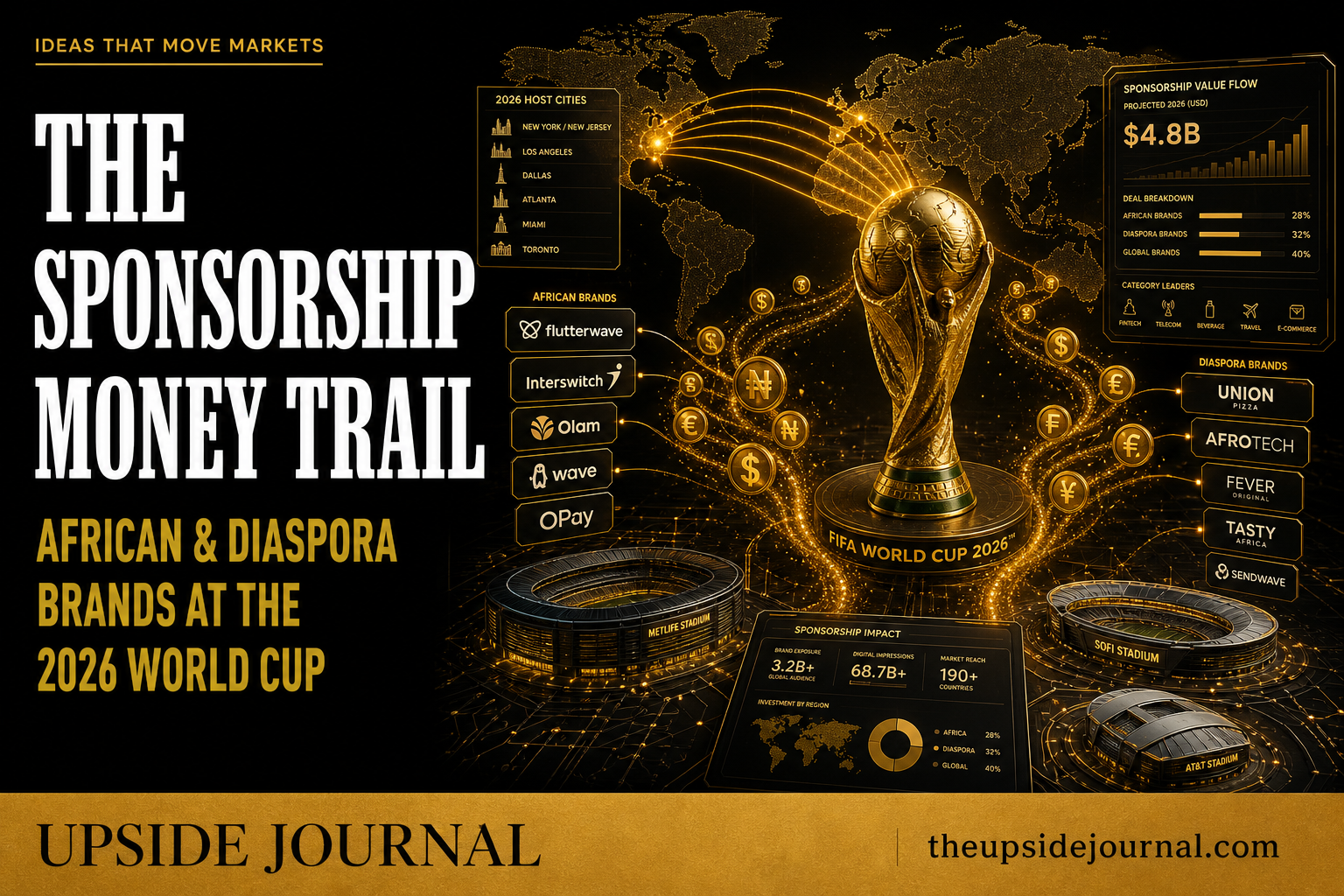
As the 2026 FIFA World Cup unfolds across North America, a complex money trail of sponsorships, activations, and creative workarounds is powering African and diaspora-linked brands. While global giants dominate Tier 1 and Tier 2 deals, African teams, diaspora operators, and agile local brands are carving out meaningful value through kit partnerships, host-city activations, and smart non-sponsor plays.
Mapping the Official Sponsorship Tiers
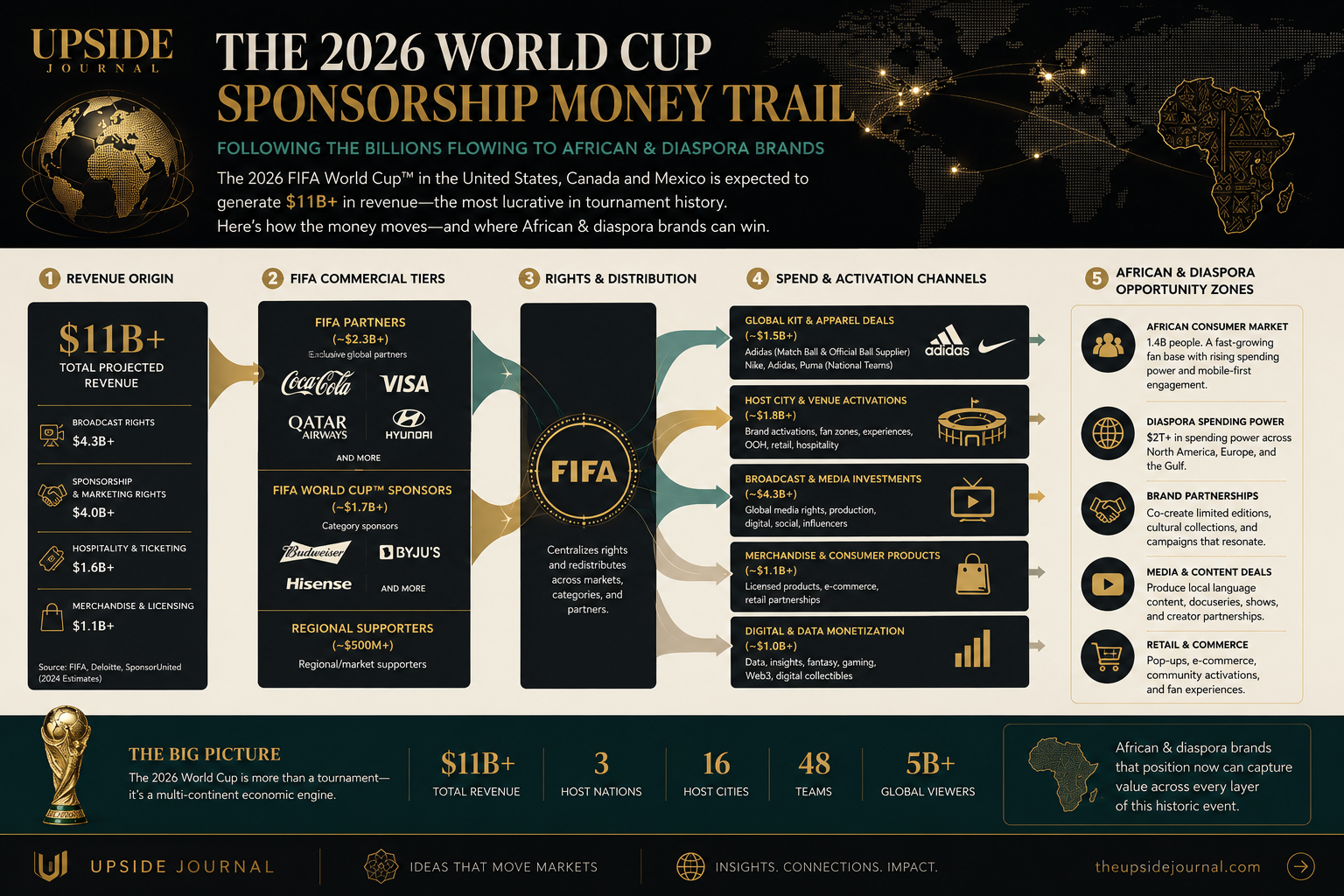
FIFA’s sponsorship program for 2026 is projected to generate around $1.8 billion. Top-tier partners (Adidas, Coca-Cola, Visa, etc.) pay premium rates for global rights. Tier 2 and regional/host-city supporters offer more accessible entry points for mid-market and African-linked brands.
Key official partners include AB InBev, Bank of America, McDonald’s, Unilever, and others, with host-city supporters filling regional gaps in cities hosting African teams.
African National Teams & Kit Deals
Adidas continues its strong presence with multiple African teams, including South Africa (Bafana Bafana). Nike and Puma kit deals with other African sides (e.g., Nigeria, Ghana, Senegal, Morocco, Egypt) create visible brand exposure across billions of viewers.
Benin’s selection to produce jerseys for the tournament marks a notable win for African manufacturing, creating jobs and showcasing local capability on the global stage.
Diaspora & Host-City Activation Plays
Diaspora communities in host cities (Atlanta for South Africa matches, Philadelphia for multiple African/diaspora teams) are driving grassroots sponsorship and partnership opportunities. Chambers of commerce, cultural institutions, and diaspora businesses are activating through official after-parties, fan zones, and local supplier deals.
Host-city supporter programs allow regional brands to gain visibility without FIFA-level budgets.
Creative Non-Sponsor Strategies Paying Off
With FIFA’s strict “clean stadium” policy limiting ambush marketing, smart brands are using clever workarounds — viral stunts, pre-taped content, and cultural programming — to capture attention. Diaspora-focused cultural events and content creators are turning passion into economic opportunity through merchandise, tourism tie-ins, and community activations.
ROI Benchmarks & Lessons for Operators
Successful African and diaspora-linked activations emphasize authenticity, community ownership, and multi-channel amplification (social + on-ground). Early signals show strong engagement from young, mobile-first African and diaspora audiences, translating into measurable brand lift and direct revenue for aligned businesses.
The Long-Term Diaspora Brand Flywheel
The 2026 World Cup is accelerating a flywheel where sponsorship exposure, cultural storytelling, and diaspora networks combine to build lasting brand equity. Operators who map the money trail early — from kit deals to local activations to content partnerships — position themselves for sustained growth beyond the final whistle.
What World Cup sponsorship or activation play are you tracking in 2026? Share in the comments or join our premium membership for deeper deal flow briefings and operator networks. Intelligent. Cultural. Global. Human.“Where the world’s conversations become movements.”
---