

Ridwan Olalere: Building the Financial Infrastructure Connecting Africa's Global Diaspora
Ridwan Olalere didn't build another remittance app. He built LemFi as licensed financial infrastructure for the African diaspora — and that distinction is why it's defensible.

Executive Summary
Ridwan Olalere is the co-founder and CEO of LemFi, a company most coverage describes as a remittance app for African and diaspora communities. That description undersells what LemFi actually is: licensed, multi-jurisdictional financial infrastructure built specifically to solve a problem legacy banks structurally cannot — moving money reliably between high-regulation Western markets and high-friction African and diaspora corridors.
This article is the second node in Upside Journal's Diaspora Operators cluster. Where The Rise of Diaspora Operators: How African Founders Are Building Global Infrastructure Companies established why diaspora founders build a structurally different class of company, this piece uses Olalere and LemFi as the concrete proof point: what dual-system fluency looks like when it becomes a licensed, operating business.
Why This Matters
The African diaspora sends tens of billions of dollars home annually through a system built for a different era — one where banks charged high fees, cleared slowly, and treated informal-market receivers as compliance risk rather than customers. Traditional banks were never built to solve this. They optimize for single-jurisdiction reliability, not cross-border corridor complexity.
Olalere's insight was structural, not product-level: the fix isn't a cheaper wire transfer. It's owning the settlement rail itself, licensed on both ends of the corridor, so trust doesn't have to be borrowed from a legacy bank at every hop.
Who Is Ridwan Olalere
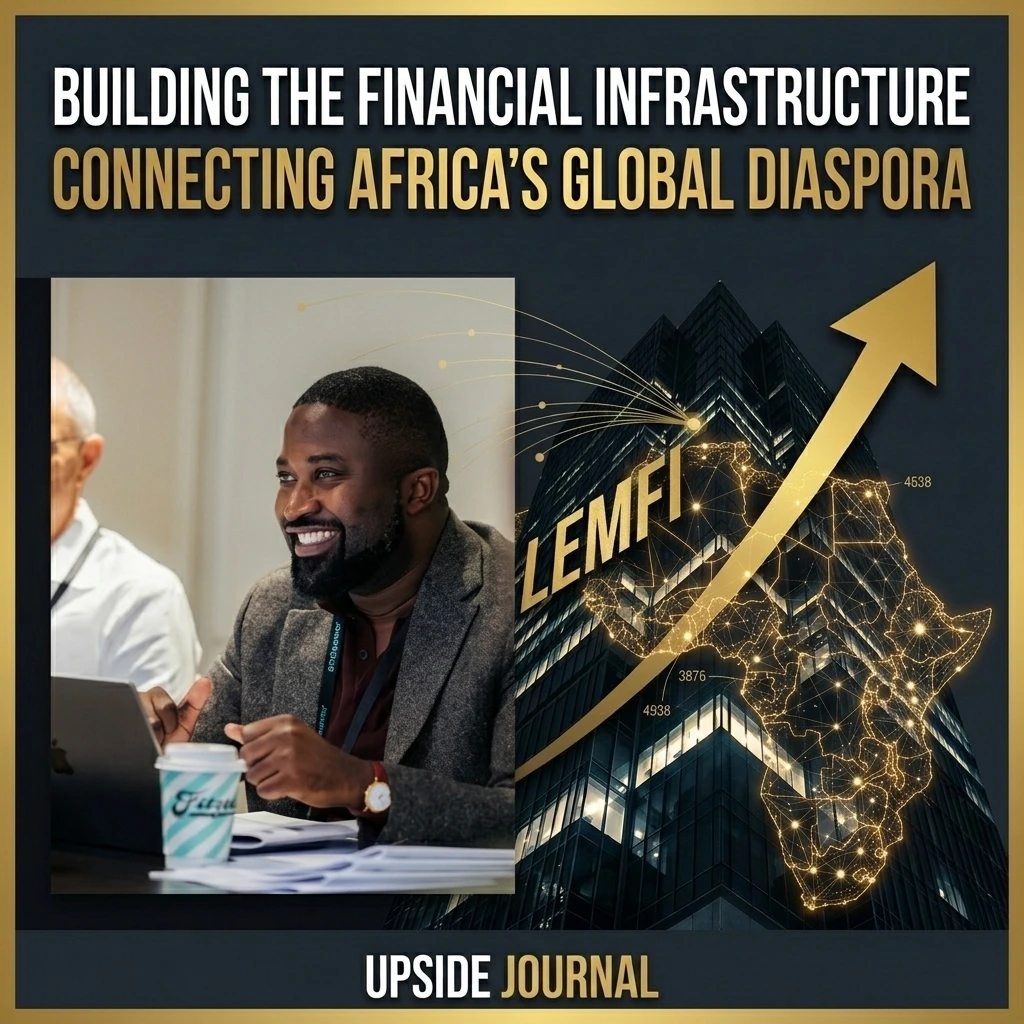
Olalere co-founded LemFi (originally Lemonade Finance) in 2020 after experiencing the diaspora money problem directly — the friction, delay, and cost of moving money between the UK, Canada, the US, and Nigeria for himself and his community. That lived friction is the same "dual-system" pattern described in The Rise of Diaspora Operators: a founder who has operated inside both the high-regulation send market and the high-friction receive market, and who therefore designs for the gap between them rather than for either system alone.
LemFi has since scaled into a licensed, multi-market financial services company serving diaspora communities from Africa, and increasingly Southeast Asia and Latin America, sending money to and from Western markets — raising institutional venture capital along the way and expanding its regulatory footprint corridor by corridor.
The Problem Banks Couldn't Solve
Regulatory Fragmentation
Every corridor LemFi operates in requires separate licensing: money transmission in the US on a state-by-state basis, FCA-equivalent authorization in the UK, and central bank approvals across African receiving markets. A traditional bank optimizes for depth in one regulatory regime. Diaspora remittance requires depth in several, simultaneously, reconciled against each other.
Identity and Trust Verification
Receivers in African markets are frequently underserved by Western credit-scoring and identity-verification infrastructure, which
assumes a data trail that doesn't exist in the same form locally. Banks treat this as risk to avoid. LemFi treats it as infrastructure to build.
Settlement Speed and Cost
Legacy correspondent banking routes money through multiple intermediary banks, each taking a cut and adding delay. Owning more of the settlement stack — rather than renting it from correspondent banks at every step — is what allows LemFi to compress both cost and time.
Why LemFi Is Infrastructure, Not an App
This is the distinction the rest of the market gets wrong, and the one this article exists to correct.
* An app sits on top of existing rails and competes on interface and price.
* Infrastructure owns or deeply integrates the rails themselves — licensing, settlement, compliance — and becomes progressively harder to displace as it scales.
LemFi's expanding licence portfolio, direct banking partnerships, and multi-corridor settlement capability are the infrastructure layer. The consumer app is simply the visible surface of that layer — the same pattern this publication has tracked in Digital Trust Infrastructure, where the visible product (an ID check, a payment) sits on top of a much deeper trust and compliance architecture that competitors cannot easily replicate.
The Regulatory Depth as Moat
Consistent with the diaspora-operator thesis, LemFi treats regulatory depth as a competitive advantage rather than a cost center to minimize. Every new licence secured in a receiving or sending market is a barrier competitors must also clear — and clearing it requires exactly the dual-system fluency that pure Western fintechs or pure African fintechs individually lack.
This mirrors the pattern detailed in Regulatory Weaponization: compliance-by-design, treated as a moat rather than friction, compounds into durable competitive advantage precisely because most competitors treat it as overhead to be minimized.
Why Now
Three forces converged to make this the right decade for LemFi's model:
* Diaspora remittance scale. Annual formal remittance flows into Sub-Saharan Africa alone now run into the tens of billions of dollars, a market too large for informal channels to fully absorb and too fragmented for any single legacy bank to serve well.
* Mobile-first financial rails. Mobile money penetration across receiving markets created the last-mile infrastructure LemFi needed to plug into, without having to build physical distribution itself.
* Institutional capital appetite for infrastructure, not apps. As detailed in Africa's AI Talent Diaspora Flywheel, diaspora-linked capital increasingly favors founders building rails over founders building thin consumer layers — precisely because rails compound and apps don't.
What Broader Trend Ridwan Olalere Represents
Olalere is not an outlier. He is the clearest visible example of a pattern this publication has tracked across sectors: Diaspora Operators building infrastructure specifically because they have lived inside the gap between two incomplete systems.
The same pattern shows up in logistics, energy, and identity infrastructure across the continent — founders who could not simply import a Western playbook or simply localize an African one, and who instead built something native to the corridor itself. LemFi is the fintech-specific expression of that same design logic.
Operator Takeaways
* Regulatory depth compounds — each new licence is both a market unlock and a barrier to competitors.
* Infrastructure outlasts apps — the defensible layer is the rail, not the interface sitting on top of it.
* Dual-system fluency is the actual product — it is what allows the company to be trusted simultaneously by Western regulators and African receivers.
* Corridor-by-corridor expansion is a deliberate strategy, not a limitation — each corridor requires its own compliance build, which is precisely why competitors struggle to replicate it quickly.
Key Takeaways
Ridwan Olalere and LemFi are best understood not as another remittance app competing on price, but as a licensed financial infrastructure company solving a problem legacy banks were structurally unable to solve. The lesson for operators, investors, and policymakers is the same lesson at the heart of the diaspora-operator thesis: the founders who understand both systems well enough to design for the gap between them are the ones building the infrastructure that lasts.
Related Reading
* The Rise of Diaspora Operators: How African Founders Are Building Global Infrastructure Companies
* Africa's AI Talent Diaspora Flywheel
* Lagos to London: How Nigeria's Tech Diaspora Is Reshaping Global VC
* Digital Trust Infrastructure: The Foundation of Africa’s Next Economic Leap
* Nigeria's Land Registry Bottleneck Is Costing Billions
* The $705 Million Surge: De-Risking Non-Traditional Venture Hubs
* Africa's Hidden Unicorns: 5 Startups Western VCs Are Ignoring
External References
* World Bank — Migration and Remittances Data
* GSMA — Mobile Money State of the Industry Report
* Financial Conduct Authority (UK) — Money Transmission Regulation
* AfricaNenda — State of Instant and Inclusive Payment Systems
Intelligent. Cultural. Global. Human. "Where the world's conversations become movements."