

CBN Regulatory Sandbox 2.0: 5 Critical Questions for Fintech Operators
Nigeria Fintech Sandbox 2026: 5 Questions for the CBN

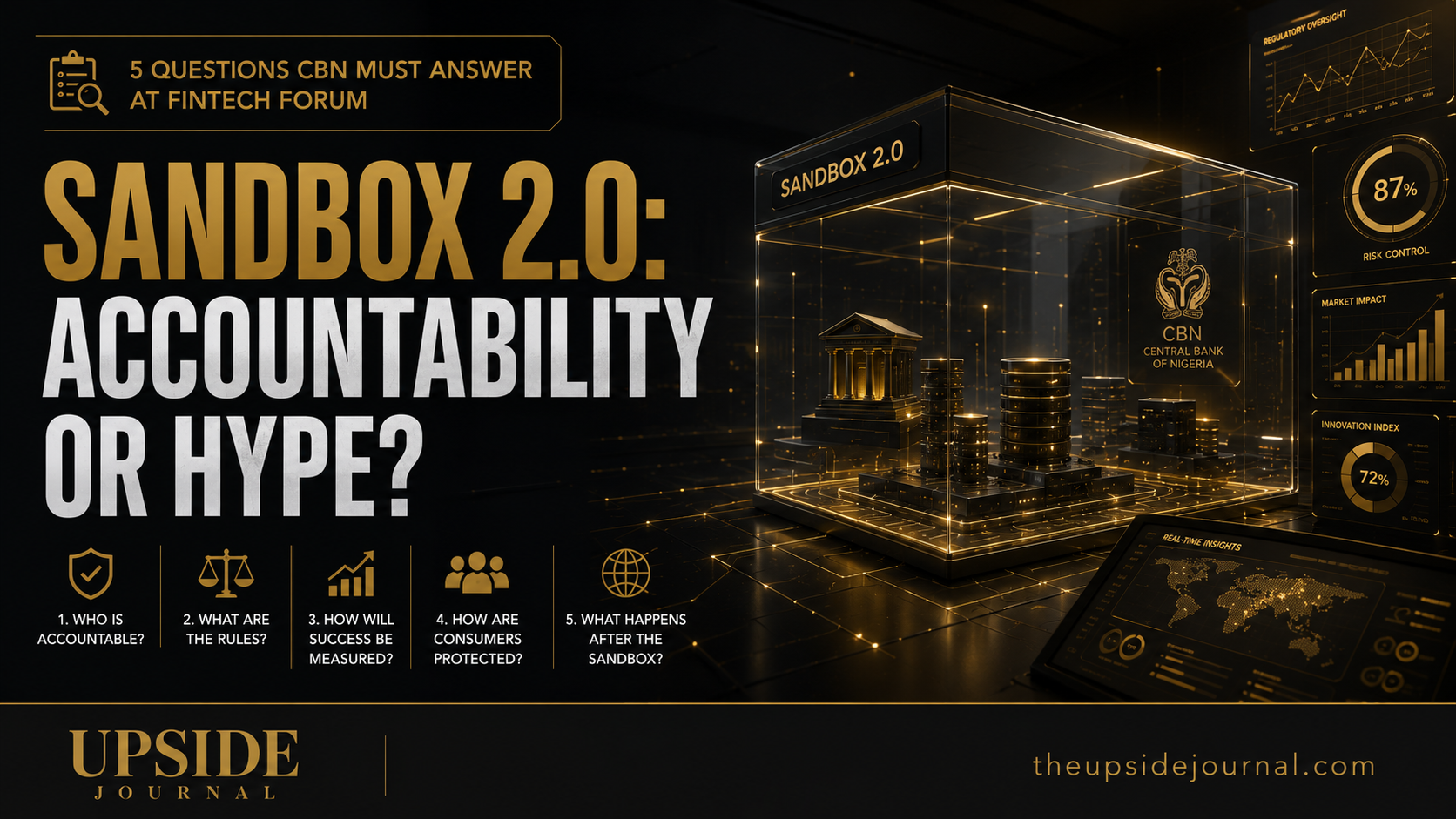
Nigeria's Fintech Sandbox Has Gone Dark Before. Here's What Founders Should Ask at the July 30 Regulatory Roundtable
The Nigeria Fintech Forum 2026 opens on Thursday, 30 July, at the Civic Centre in Victoria Island, Lagos, under a theme that reads like a challenge: "Finance, Regulation, and the New Operating Reality." More than 1,700 attendees are expected — regulators, bank executives, fintech founders, infrastructure providers, and investors, many travelling from London and other UK fintech hubs with a direct stake in Nigeria's cross-border payments corridor. A dedicated Regulatory Roundtable Session sits on the agenda, bringing regulators and compliance leaders into direct conversation with operators about licensing, supervision, and where Nigeria's financial regulatory environment goes next.
For UK-based investors, diaspora fintech founders, and remittance operators watching the Nigeria–UK corridor, this is the year the conversation should be sharper than usual. Five months earlier, on 2 February, the Central Bank of Nigeria published its Fintech Policy Insight Report — the first sector-wide regulatory review since the 2022 Payment Systems Vision. Buried inside is a proposal with real teeth for anyone building in AI, RegTech, or cross-border payments: an expanded "Regulatory Sandbox 2.0," opened for the first time to microfinance banks, payment service banks, and telcos, running on a "test-then-codify" model in which lessons from live pilots feed directly into formal rules.
It's a strong pitch. Nigeria has made it before.

What's actually on the table
The CBN's own roadmap lays out a phased build: a Standing Fintech Engagement Forum and an Open Banking implementation roadmap within the first three months of the report's publication; sandbox expansion and cross-border "regulatory passporting" consultations within nine months; and a formalised Fintech Advisory Council within eighteen. AI and RegTech use cases are named explicitly as priorities for the first pilot cohort, alongside cross-border payments and embedded finance — areas of direct relevance to UK fintechs already operating remittance and payment-rail partnerships into Nigeria.
Notably, the report doesn't pretend the risk isn't real. It proposes a Fintech Reform Delivery Secretariat inside the CBN precisely because, without one, it warns there's a serious chance implementation stalls.
According to a TechCabal explainer on the report, this new framework must be viewed carefully as the report's framing for an expanded sandbox rather than a fully operating, live environment. That distinction matters because boilerplate caution exists for a reason: it's happened before.
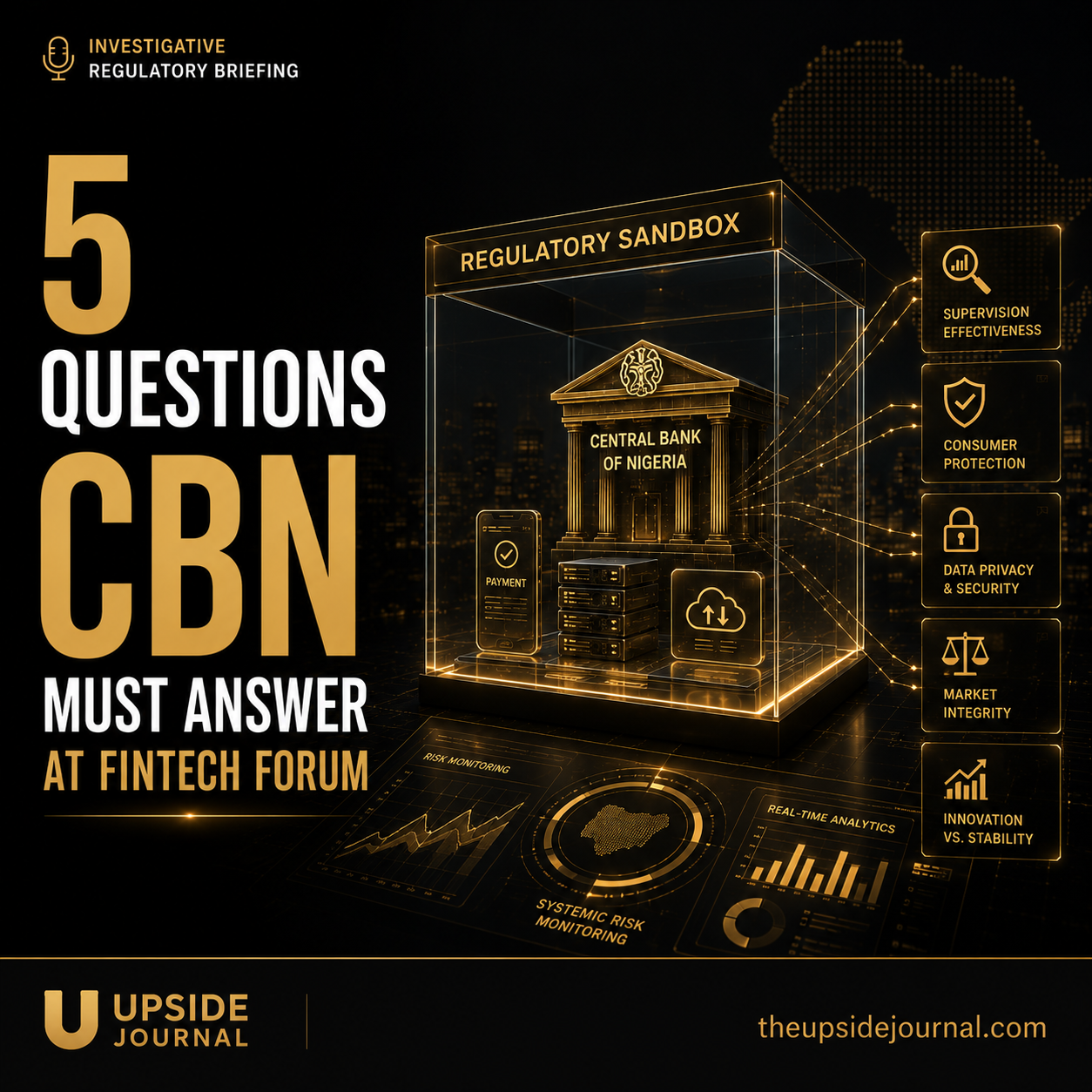
The 2022 sandbox, and the months of silence
The CBN's sandbox application process opened in late 2022, designed to admit applicants in cohorts on an annual basis. Applications opened that December. Months later, public reporting indicated no cohort list had been published, and applicants told TechCabal they had no visibility into where their submissions stood. One founder — AbdulAfeez Oguntoyinbo of financial-inclusion platform Esusu Africa — said the central bank had told him months earlier that his startup reached the final stage, then went silent. Neither the CBN nor EMTECH, the Nigerian infrastructure partner that built the sandbox's underlying technology, commented on the delay at the time.
That history isn't a reason to dismiss Sandbox 2.0. It's the reason founders at the 30 July roundtable — and the UK investors backing them — have every right to ask harder questions than "when do applications open."
Why the regional comparison matters more than the domestic one
Nigeria isn't the only market running this experiment — and it may not be the fastest. At the Africa Fintech Summit's gathering, discussions centred on a progress update that gestures toward a critical threshold: fintech licence passporting, paired with a live VASP sandbox pilot designed to let a startup licensed in one African market operate across others without restarting the process from scratch.
Regional peers are moving faster on passporting and regulatory interoperability rather than waiting out long-delayed domestic rollouts. The wider 2026 events calendar underlines the point. The Inclusive Fintech Forum in Kigali and the Africa Payments & RegTech Forum in Johannesburg both convened regulators and operators around the same underlying question: how sandboxes translate into something founders can actually build a roadmap around, not just a press release. Nigeria's Fintech Forum on 30 July is Lagos's turn to have that conversation, in front of the market that still calls itself Africa's largest — and one of the UK's most significant diaspora finance corridors.Five questions worth asking on 30 July
For founders and investors deciding whether Sandbox 2.0 deserves their time, these are the questions the CBN's report doesn't yet answer:
1. Who publishes the cohort list, and on what fixed schedule? The 2022 sandbox never named its applicants publicly during its stalled period. A dated, published admission list is the simplest trust signal the CBN can offer.
2. What happens to a startup's testing data and compliance history if the cohort stalls again? Founders who build roadmaps around a sandbox timeline that quietly disappears lose runway they can't recover.
3. Does Sandbox 2.0 include any passporting discussion with ECOWAS regulators — or is Nigeria building a sandbox that only ever grants access to the Nigerian market, while regional neighbours build for the broader continent?
4. Is there published exit criteria — a defined, transparent path from pilot to full licence — or does admission remain, as in 2022, entirely at the CBN's discretion with no stated timeline?
5. Who staffs the proposed Fintech Reform Delivery Secretariat, and does it have the authority to force a public cohort update if the programme slips?
None of these questions assume bad faith. They assume Nigerian fintech founders — and the UK partners financing them — have already lived through one version of this promise and are entitled to ask for the version with guardrails.
What to watch after 30 July
Upside Journal will be tracking what regulators actually commit to at the Regulatory Roundtable Session — not the panel talking points, but the specific dates, named contacts, and published mechanisms that come out of the room. If Sandbox 2.0 produces a public pilot cohort inside the CBN's own nine-month window, that's a real story. If it goes quiet the way its predecessor did, that's a real story too — and one Nigerian fintech, and its UK-based investors, deserve to have someone actually follow up on.
What would make you trust a regulatory sandbox again after it's gone dark once? Share your view in the comments, or join our premium network for deeper regulatory intelligence briefings ahead of Nigeria Fintech Forum 2026.
Intelligent. Cultural. Global. Human. "Where the world's conversations become movements." Related reading: Lagos to London: How Nigeria's Tech Diaspora Is Reshaping Global VC · Africa's Hidden Unicorns: 5 Startups Western VCs Are Ignoring · The EU AI Act vs. The US Executive Order: A Founder's Survival Guide